Call me a nerd, but there’s nothing quite like the rush of finding a genuinely good deal on something you actually need. I’m not talking about random gadgets that look cool on a shelf and then collect dust. I’m talking about the stuff that makes daily life easier, the kind of product you reach for again and again without thinking. For me, that product is the portable charger. I’m on my phone almost constantly—scrolling, texting, taking photos, navigating, listening to music, checking work emails, and yes, occasionally falling into a social media rabbit hole. My phone battery drains faster than I’d like to admit, and I’ve learned the hard way that waiting until the last minute to charge up is a recipe for disaster. Over the years, I’ve tested dozens of power banks, from skinny pocket-sized sticks to heavy bricks that could probably power a small appliance. And the broader WIRED Reviews team has tested hundreds. So when I say that some of our favorite portable chargers are on sale right now, I mean it’s actually exciting. This isn’t a “well, if you really need it” kind of deal. It’s a “this is the one I’d buy again, and now it costs less” kind of deal. That combination of trusted performance and a lower price is exactly the kind of thing that gets me disproportionately happy.
But why do portable chargers matter so much in the first place? It’s easy to think of them as just another accessory, but once you own a good one, you realize how many everyday problems it quietly solves. Maybe you want to be prepared in case of emergencies—a power outage, a delayed flight, a long drive through an area with no charging outlets. A power bank is great for that. It’s a little insurance policy that fits in your bag and keeps your lifeline to the world alive. Maybe you want to grind League of Legends: Wild Rift on your phone while you’re traveling for the holidays, passing time in an airport or in the back seat of a car. A power bank is great for that, too, because nothing kills the fun faster than a low-battery warning right in the middle of a ranked match. And if you have kids, you already know the struggle: you’re out somewhere, and suddenly their iPad is dead, and they’re asking if they can borrow your phone. A power bank rescues you from that situation in seconds. Then there’s the unexpected late night out—you meet up with friends, you lose track of time, your phone is at twenty percent, and you need to call a ride or check directions. A power bank means you don’t have to panic. It’s not the most glamorous piece of tech, but it’s one of the most reliable companions you can carry. Once you start using one, you wonder how you ever managed without it.
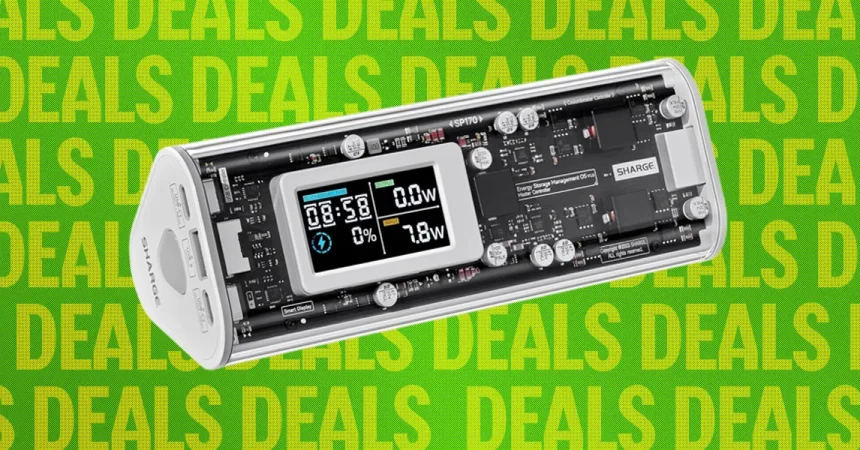
Right now, the deal that stands out the most is the Shargeek 170 Power Bank. It’s one of those products that catches your eye immediately, and honestly, it’s the best-looking power bank I’ve ever seen for a very obvious reason: it’s transparent. There’s just something about being able to see the internal components—the circuit boards, the battery cells, the little details that are usually hidden away. It feels like holding a piece of futuristic technology, the kind of thing you’d see in a sci-fi movie or a designer tech boutique. But it’s not all about looks. Under that clear shell, there’s a seriously impressive 24,000-mAh capacity, which means it can charge your phone multiple times before it needs a break. It also has a smart display that shows you exactly what’s going on, so you’re never guessing how much battery you have left. And if you’re someone who needs more than just a phone boost, the Shargeek 170 supports Power Delivery, which is a fancy way of saying it can fast-charge a wide range of devices, including laptops. You can even top up to three devices at once, which is perfect for those chaotic moments when your phone, your laptop, and your wireless earbuds all need juice at the same time. That kind of versatility is what separates a good power bank from a great one.
Let’s talk a little more about what makes the Shargeek 170 such a practical choice, beyond the obvious visual appeal. The 24,000-mAh capacity is the sweet spot for most people. It’s large enough to get you through a full day, a long flight, or even a weekend trip if you’re not charging a laptop constantly, but it’s not so massive that it feels like you’re carrying a brick in your bag. For the average smartphone, that capacity translates to roughly four to five full charges, depending on your device and how power-hungry your apps are. If you’re someone who uses their phone for navigation, music, streaming, and social media, that’s a huge relief. You don’t have to ration your usage or hunt for outlets. The smart display is another feature that I’ve come to appreciate more than I expected. It shows you the remaining battery percentage in real time, so you always know whether you have enough juice for the day or whether you should plug the power bank itself in before you head out. Some chargers leave you guessing with vague LED indicators, but this one gives you actual numbers. And when you’re charging your devices, the display can show you the output wattage and other useful info, which sounds nerdy but is genuinely helpful if you want to make sure you’re getting the fastest possible charge. The Power Delivery support is the real game-changer, though. Being able to fast-charge a laptop with a power bank means you’re not tied to an outlet when you want to work from a coffee shop, a park, or a friend’s couch. It gives you freedom and flexibility that standard phone-only power banks just can’t offer.
Of course, the big question is whether this power bank is right for you. If you’re a light phone user who rarely leaves the house without a wall charger and a car charger, you might not need something this powerful. But if you’re like me—someone whose life is built around their phone, someone who likes to be prepared, someone who gets anxious when the battery drops below thirty percent—then a reliable power bank is an essential purchase, not a luxury. The Shargeek 170 is particularly appealing if you travel frequently, work remotely, or spend long days away from outlets. It’s also a fantastic gift for anyone in your life who seems to constantly be borrowing chargers. I’m thinking of college students, new graduates, frequent flyers, parents with young kids, and even grandparents who just want to keep their phones alive for family video calls. The fact that it can charge multiple devices at once makes it a great family travel companion, too. You can throw it in your bag before a road trip and know that everyone’s devices will make it to the destination without anyone complaining about a dead battery. And because it’s on sale right now, it’s an especially good time to pick one up—whether for yourself or as a thoughtful present. A power bank might not be the most sentimental gift, but it’s one of those practical presents that people genuinely appreciate when they open it, and they appreciate it even more the first time they use it in an emergency.
At the end of the day, I think we all want the same thing: to feel a little less tethered, a little more prepared, and a little less stressed about the small inconveniences of modern life. A good power bank won’t change the world, but it can change how you experience your day. It’s the difference between rushing around looking for an outlet and confidently moving through your schedule with a full battery. It’s the difference between cutting a phone call short because your screen is about to die and staying connected as long as you need to. It’s the difference between feeling stuck and feeling free. That might sound like a lot to expect from a simple gadget, but if you’ve ever been stranded with a dead phone, you know exactly what I mean. The Shargeek 170 Power Bank is one of those rare products that combines form and function so well that it almost feels like a luxury item—but it’s also genuinely practical. It looks cool, it charges fast, it handles multiple devices, and it gives you that wonderful sense of security that comes from having backup power in your bag. And right now, with a deal making it even more affordable, there’s no better time to treat yourself. So go ahead and call me a nerd. I’ll happily accept the label if it means I get to brag about scoring an incredible deal on something I actually use every single day. Whether you’re planning holiday travel, bracing for a busy week, or just tired of your phone dying at the worst possible moments, this is one purchase you won’t regret. It’s one of those rare situations where the hype is actually justified, and the timing couldn’t be better.